



What is eVTOL? Exploring the Future of Urban Air Mobility
Traffic congestion, crowded transit systems, and growing cities are pushing transportation to rethink the way we move. Among the most promising innovations is eVTOL, short for electric Vertical Takeoff and Landing aircraft. Designed to rise and descend like a helicopter while flying with the efficiency of an airplane, eVTOL is shaping a new vision for urban air mobility.
But what exactly is eVTOL, and how could it transform everyday travel in the near future?
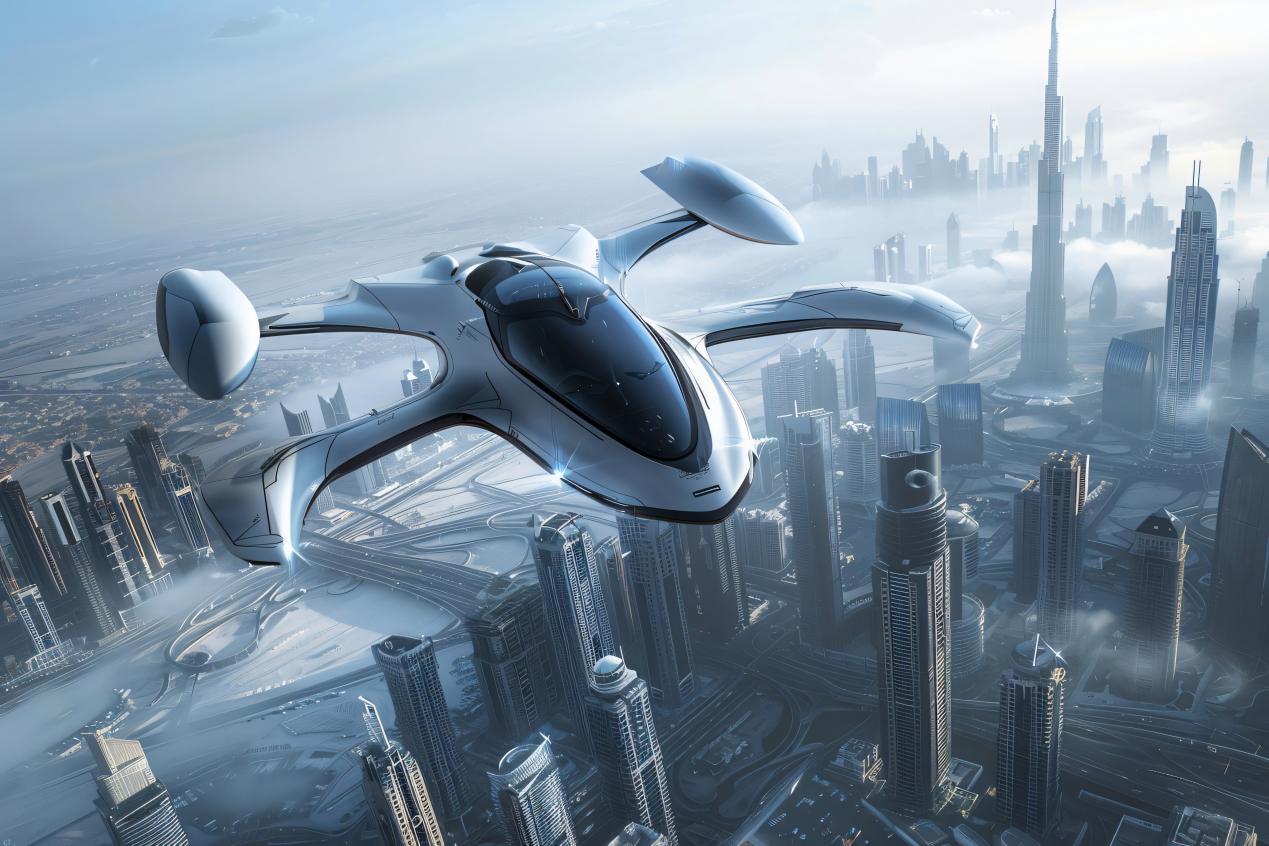
What is an eVTOL?
At its core, an evtol is a category of aircraft that utilizes electric power to hover, take off, and land vertically. This mechanism allows these vehicles to operate in tight urban spaces without the need for traditional runways.
Once the aircraft reaches a specific altitude, many designs transition to a horizontal cruise mode, utilizing wings for lift to maximize energy efficiency.
Core Technological Pillars
The primary mechanism that differentiates these aircraft is Distributed Electric Propulsion. This system relies on several key innovations:
- Redundancy and Safety: By distributing power across several independent motors, manufacturers achieve a level of safety that ensures a controlled descent even if a single motor fails.
- Noise Reduction: The use of multiple small rotors results in a 65 percent reduction in exterior noise compared to traditional helicopters.
- Environmental Impact: Electric powertrains eliminate direct carbon emissions, supporting global sustainability goals for urban transportation.

Recent eVTOL Breakthroughs
The industry has seen a surge of activity as companies move toward full-scale operations.
Infrastructure Land Grabs
Archer Aviation recently completed a landmark $126 million purchase of Hawthorne Municipal Airport. The acquisition is aimed at building a dedicated urban air mobility (UAM) hub for the Los Angeles area, providing infrastructure for aircraft charging, maintenance, and passenger boarding as commercial air taxi services approach launch readiness.
AI Integration
Archer Aviation has partnered with NVIDIA to leverage the NVIDIA IGX Thor platform for aviation AI systems. This collaboration supports the development of autonomous-ready aircraft capable of processing complex environmental and flight data in real time.
Manufacturing Expansion
Archer Aviation has partnered with NVIDIA to leverage the NVIDIA IGX Thor platform for aviation AI systems. This collaboration supports the development of autonomous-ready aircraft capable of processing complex environmental and flight data in real time.
CES 2026 Highlights
At CES 2026, the market’s diversification was on display with personal flying devices such as the COOLFLY ultralight and the LEO JetBike. These products aim to make low-altitude personal flight more accessible beyond traditional air taxi services.
Autonomous Milestones
Wisk Aero achieved a significant milestone with the successful maiden flight of its Generation 6 aircraft, positioning it as the first candidate pursuing FAA certification for fully autonomous passenger operations.
Emerging Trends Shaping the Future
The Modular Flying Car
Next-generation urban air mobility concepts are increasingly adopting modular design philosophies. Companies such as Wisk Aero are developing aircraft platforms that emphasize scalable cabin configurations and autonomous systems integration.
The successful maiden flight of Wisk’s Generation 6 aircraft demonstrates how removing the pilot from the cockpit can free up cabin space for passengers while enabling standardized vehicle architectures. Modular designs also simplify maintenance, upgrades, and fleet deployment across different cities.
Propulsion & Energy Synergy
The transition toward more advanced propulsion systems is closely linked to breakthroughs in energy storage.
Traditional lithium-ion batteries often struggle to meet the high specific energy demands of vertical takeoff and sustained cruise flight. The industry is now exploring solid-state batteries, which offer higher energy density and improved safety by eliminating flammable liquid electrolytes.
Vertiport Development
As autonomy advances, infrastructure is evolving in parallel.
The push toward pilotless operations—supported by advanced flight software and three-dimensional air traffic management systems—requires purpose-built vertiports capable of handling charging, maintenance, and rapid passenger turnover.
Dedicated takeoff and landing hubs are becoming a critical foundation for safe and efficient urban air mobility ecosystems, ensuring that aircraft, energy systems, and digital traffic control platforms operate as an integrated network.
The Road Ahead: Challenges and 2030 Outlook
While the potential for these power sources is immense, the transition is happening in stages.
It is important to clarify that semi-solid batteries represent the immediate solution for the 2026 market. These cells provide a significant upgrade over current technology while manufacturers refine the processes for all-solid mass production, which is currently targeted for the 2028 to 2030 window.
The cost factor remains a hurdle that the industry is actively addressing.
While a solid-state battery is currently more expensive to produce than a standard lithium-ion cell, new manufacturing techniques are being developed to bridge the gap. Technologies like dry coating are expected to streamline production and bring costs down significantly in the coming years.

Powering the Future at The Battery Show Asia 2026
The rapid development of the evtol sector is intrinsically linked to advancements in battery chemistry and manufacturing. As the industry moves toward commercialization, the demand for high-performance cells that can withstand rapid charging and high-discharge cycles has reached an all-time high.
The Battery Show Asia 2026 serves as the primary forum for these discussions, bringing together the world’s leading engineers and battery manufacturers to solve the energy challenges of flight.